


Umrah Guide: A Step-by-Step Spiritual Journey
Embarking on the journey of Umrah is a dream for every believer. It is a pilgrimage of the heart, a return to the Creator, and a cleansing of the soul. Understanding the rites and rituals is crucial to performing Umrah correctly and reaping its full spiritual benefits.
1. Ihram: The Sacred State
The journey begins with Ihram, the intention to enter a state of sanctity. Before crossing the Miqat, pilgrims must bathe (Ghusl), wear the Ihram garments—two white unstitched sheets for men—and make the Niyyah (intention) for Umrah. The Talbiyah is then recited frequently: "Labbayk Allahumma Labbayk..."
2. Tawaf: Circumambulating the Kaaba
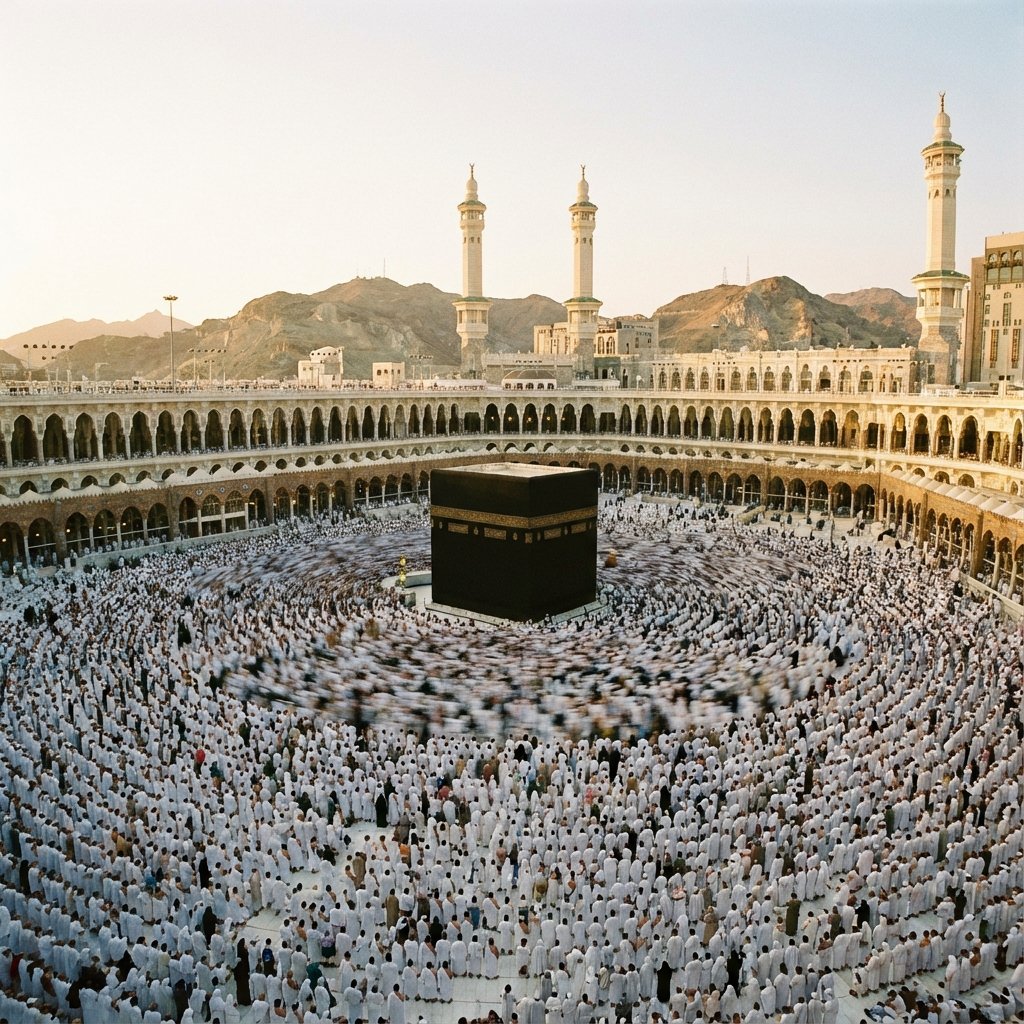
Upon entering Masjid al-Haram, the pilgrim proceeds to the Kaaba to perform Tawaf. This involves circling the Kaaba seven times in an anti-clockwise direction, starting from the Hajar al-Aswad (Black Stone). It is a time for deep reflection, supplication, and connection with Allah.
3. Sa’i: Walking between Safa and Marwa
After Tawaf and praying two Raka’ahs at Maqam Ibrahim, pilgrims move to the hills of Safa and Marwa. They walk back and forth seven times, commemorating Hajar’s (AS) desperate search for water for her son Ismail (AS). This ritual symbolizes patience, perseverance, and trust in Allah’s provision.
4. Halq or Taqsir: Cutting the Hair
The final rite is Halq (shaving the head for men) or Taqsir (trimming the hair for men and women). This act signifies humility and a fresh start, marking the completion of Umrah and the exit from the state of Ihram.
May Allah accept the Umrah of all pilgrims and invite us to His House again and again.